
Demystifying Commercial & Industrial Energy Storage Systems
The global Commercial & Industrial (C&I) energy storage market is expected to grow from $91.99 billion in 2025 to $183.99 billion by 2031, at a CAGR of 11.99%. But what exactly makes up a C&I energy storage system? Let’s break it down — from the “heart” to the “brain.”
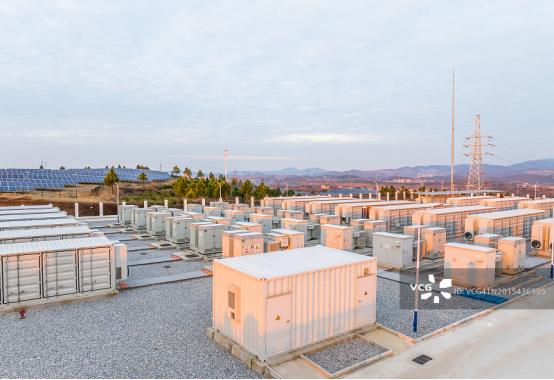
Battery System – The “Heart”
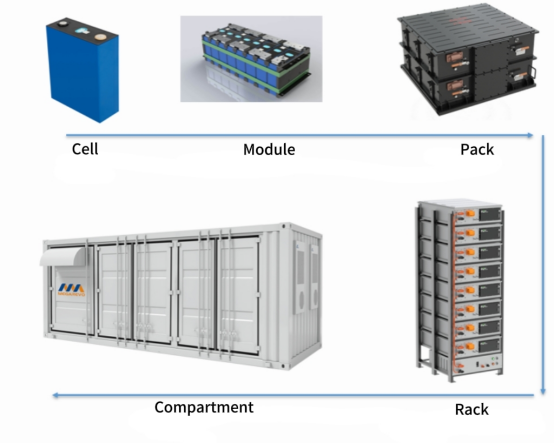
The Battery System is where energy is stored — typically in high-density lithium-ion batteries known for their durability and efficiency. Battery cells are configured in modules and racks to achieve the needed capacity and voltage. In 2025, lithium-ion technologies controlled 80.4% of the C&I energy storage market, with cycle lives exceeding 6,000 cycles at 80% depth of discharge. Stationary battery pack prices averaged $70/kWh in 2025, a 35% drop from 2020.
Common cell formats in C&I applications include 280Ah and 314Ah LFP (Lithium Iron Phosphate) cells, with 314Ah offering higher energy density. Leading manufacturers now offer cells with over 7,000 cycles.
Power Conversion System (PCS) – The “Muscle”
The Power Conversion System (PCS) is the bidirectional power converter that manages the flow of electricity between the grid, batteries, and end-use applications. It converts AC to DC during charging and DC to AC during discharging. Think of it as the system’s “muscle” — it does the heavy lifting of power conversion.
Advanced PCS units achieve conversion efficiencies of up to 98.5%. In C&I scenarios, 100kW to 250kW PCS units are most common. The PCS receives control commands from the EMS and communicates with the BMS via CAN interface to ensure safe battery operation.
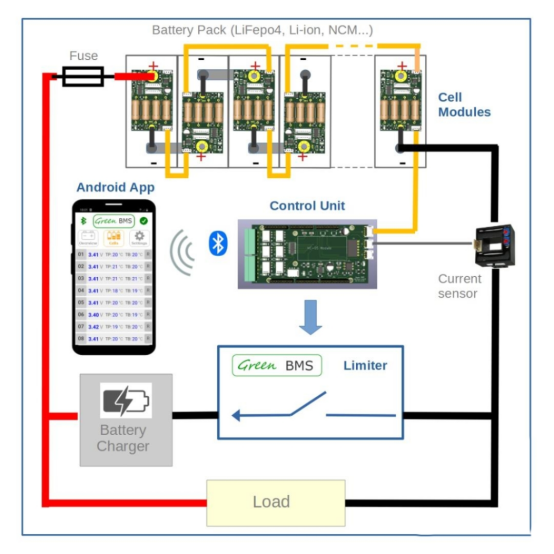
Battery Management System (BMS) – The “Brain” of the Battery
The Battery Management System (BMS) monitors voltage, temperature, and current to maintain safety and efficiency. It balances cells and manages cooling to prevent overheating, extending battery life. Acting as the “brain” of the battery, the BMS ensures every cell operates within safe parameters.
Key BMS functions include: real-time monitoring of battery status (voltage, current, temperature), State of Charge (SOC) estimation, cell balancing, thermal management, and fault diagnosis with protective actions. Advanced BMS systems achieve SOC estimation errors of less than 3%.
Energy Management System (EMS) – The “Control Center”
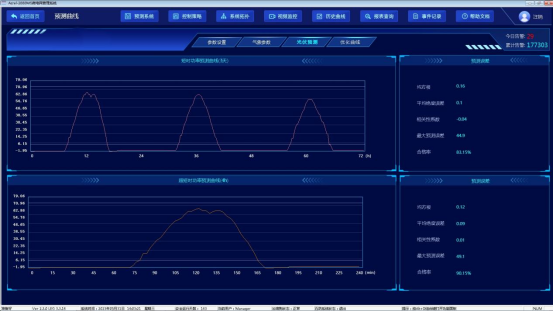
The Energy Management System (EMS) serves as the “control center” of the entire energy storage system. It monitors and controls the system’s operational status by collecting real-time data from various components — battery voltage, current, State of Charge (SOC), and more. Based on this data and predefined strategies, the EMS manages charging and discharging processes to ensure safe, stable, and efficient operation.
The EMS enables intelligent functions like peak shaving, load shifting, and backup power management. It also supports remote monitoring via cloud platforms, allowing 24/7 operation and maintenance.
Supporting Systems – The Supporting Cast
A complete C&I energy storage system also includes essential supporting systems:
Thermal Management System: Liquid cooling maintains temperature differences within <3°C, significantly extending battery cycle life. Advanced liquid cooling technology ensures temperature consistency across cells even under extreme conditions.
Fire Protection System: Multi-layer protection including thermal runaway early warning, automatic fire suppression, and smoke/temperature monitoring.
Power Distribution System: Manages electrical distribution within the system.
HVAC & Safety Systems: Ensure stable operation in diverse environmental conditions.
How These Components Work Together
These components work together in perfect harmony:
The Battery stores the energy → The BMS monitors and protects the battery → The PCS converts power between AC and DC → The EMS orchestrates everything based on real-time data and optimization strategies
This integrated architecture, often referred to as the “3S System” (PCS + BMS + EMS) , is the foundation of every modern C&I energy storage solution.
Why This Matters
By 2025, global battery storage deployment reached 108 GW — 40% more than 2024, and now eleven times higher than in 2021. With over 400 multinational firms pledging 100% renewable electricity and consuming upwards of 380 TWh annually, C&I energy storage is no longer optional — it’s essential for energy resilience, cost optimization, and sustainability.
Understanding the system architecture is the first step toward making informed investment decisions. Whether you’re a facility manager, an energy consultant, or an investor — know what’s inside the box.
What questions do you have about C&I energy storage? Drop them in the comments below!