
From Grid Balancer to Corporate Profit Center: C&I Energy Storage Is Reshaping the Global Energy Order
Introduction
If you follow the energy sector, you’ve certainly heard of “energy storage.” But you may not yet realize that one specific segment — Commercial & Industrial (C&I) energy storage — is becoming a core tool for global businesses to cut costs and achieve carbon neutrality, at a pace far exceeding expectations. This article uses global data and cases to help you understand this booming market at a glance.
Part 1: Energy Storage — The “Ballast” of the New Power System
As the global energy transition deepens and the share of renewables keeps rising, the temporal and spatial mismatch between power supply and demand has become increasingly acute. Energy storage is rapidly evolving from a supporting asset into a core infrastructure for ensuring grid stability and accelerating the path to net zero.
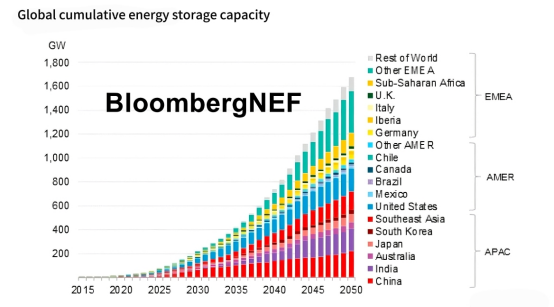
BloombergNEF estimates that global energy storage systems commissioned in 2025 exceeded 112 GW — comparable to the scale of dozens of large power plants. The global market is now shaped by a three-pole structure of China, the United States, and Europe, which together accounted for 88% of new installations last year. Emerging markets in the Middle East and Latin America also gained strong momentum, with installed capacity growing 96.9% year-on-year. Industry leaders project that by 2030, the global energy storage industry chain market size could reach the USD 1.4 trillion level.
However, 2026 has brought new challenges — price pressure, stricter regulations, and supply chain restructuring are testing the industry. Against this backdrop, one segment is emerging with remarkable speed: Commercial & Industrial (C&I) Energy Storage.
Part 2: What Is C&I Energy Storage?
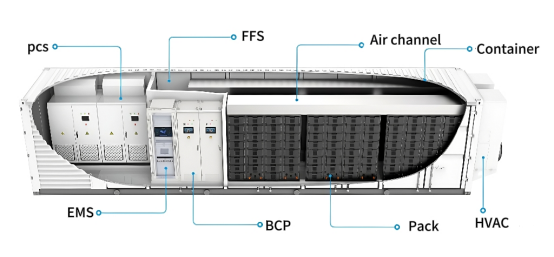
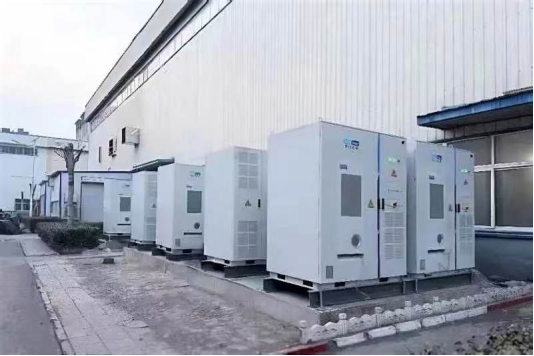
By application scenario, energy storage falls into three categories: front of the meter/utility scale (large plants), C&I (commercial and industrial user-side), and residential (households). C&I systems are installed at factories, malls, office buildings, etc. They enable temporal shifting of electricity — charging during low-price periods and discharging during peak-price periods — to reduce electricity bills, while also offering backup power, demand response, peak demand management, and wholesale market participation.
Part 3: Why Is C&I Energy Storage Taking Off Globally?
Many people think of C&I storage as a “larger residential battery” or a “smaller utility-scale system” — this is a major misconception. C&I storage has a far more complex business model than residential storage, with unit values tens of times higher. More importantly, the demand drivers vary dramatically across regions: Europe relies on dynamic price arbitrage; Southeast Asia needs backup in grid- constrained areas; Africa replaces diesel; North America is driven by corporate ESG and renewable commitments.
What’s more critical: C&I storage payback periods have compressed to 3–5 years. With stationary battery pack prices averaging USD 70/kWh in 2025, three to five year paybacks have become common in high-tariff regions. The economics have shifted from “promising” to “provable” — and that’s the fundamental driver behind surging demand. Mordor Intelligence forecasts the C&I energy storage market will grow from USD 91.99 billion in 2025 to USD 183.99 billion by 2031, at a CAGR of 11.99%.
Part 4: Business Models — Beyond Peak Shaving
If C&I storage used to rely primarily on “peak shaving and valley filling” for tariff arbitrage, today it has evolved into a diverse set of revenue models:
| Model | Core Logic | Typical Markets |
| PV+Storage Self-consumption | Solar + storage for on site use, reducing bills | Europe (high electricity prices) |
| Wholesale Market Arbitrage | Participating in power markets to capture price spreads | Germany, dynamic pricing markets |
| Ancillary Services | Grid frequency regulation and balancing, stable returns | Denmark, Germany |
| Backup Reliability | Critical power protection in unreliable grid areas | Southeast Asia, Africa |
| ESG & Carbon Compliance | Meeting corporate renewable commitments and carbon tariffs | Global export oriented supply chains |
The last point deserves special attention: carbon regulation is increasingly forcing factories to adopt storage. More than 400 multinational firms have pledged 100% renewable electricity, collectively consuming over 380 TWh annually — roughly equivalent to Germany’s entire electricity load. Apple has committed to 100% green electricity across its supply chain by 2030, with Google, Amazon, and Microsoft making similar pledges. The EU’s Carbon Border Adjustment Mechanism (CBAM) officially took effect in January 2026. For suppliers to these global giants, storage is no longer optional — it’s a survival issue.
In terms of applications, C&I storage is expanding from industrial parks into data centers, commercial complexes, and integrated solar storage charging stations. AI data centers, in particular, are opening a multi-billion dollar incremental market. According to InfoLink Consulting, global energy storage installations reached 275.3 GWh in 2025 — a 61.3% year on year increase — with 353.4 GWh projected for 2026, driven in part by AI infrastructure demand.
Part 5: Challenges and Opportunities Coexist
The path forward for C&I storage is not without obstacles. In Europe, the EU has approved a 45 GW storage target, with storage expected to supply approximately 10% of peak demand by 2028 (up from 5% in 2025). The C&I segment specifically is targeted to expand from 9 GWh in 2026 to 24 GWh in 2028. However, the EU Battery Regulation imposes stricter sustainability, due diligence, and disclosure obligations on industrial batteries starting in 2026, adding compliance costs.
Across multiple markets, the transition from fixed time of use tariffs to dynamic, market-driven pricing is reshaping the economics of storage. Projects that relied on fixed spreads now face a more complex revenue environment — but this also separates sophisticated operators from those simply riding a policy wave.
This is precisely why the coming phase of C&I growth will be defined not by policy subsidies alone, but by operational excellence and energy asset management. The industry is moving from “installing hardware” to “managing energy assets” — and that transition opens the door to entirely new business models and value pools.
The Bottom Line
C&I energy storage stands at the dawn of a global, synchronized takeoff. It connects cost reduction for businesses on one end and the broader energy transition on the other. For business decision-makers, understanding C&I storage isn’t just about understanding a new technology — it’s about understanding the underlying economics of corporate energy costs for the next decade. For industry practitioners, competition has moved beyond hardware specifications to full scenario solution capabilities. Companies that can define use cases, optimize operations, and manage energy assets will capture the lion’s share of value in the next wave. This race is just getting started.